
The one-on-one tutoring model places a single tutor with a single student for every session, with no competing demands on the tutor’s attention. That structural simplicity is the source of its power. The tutor can pace instruction to exactly where the student is, respond to confusion in real time, and build the kind of rapport that keeps a reluctant learner engaged. The verdict from research is clear: when implemented with fidelity, 1:1 tutoring is among the most effective interventions for targeted remediation and acceleration, particularly in early literacy and foundational math.
Three bodies of evidence support that claim:
- Randomized controlled trials (RCTs) comparing one-on-one and two-on-one virtual tutoring formats, with outcome analyses showing substantially larger literacy gains in the 1:1 condition.
- Stanford SCALE transcript analysis, which used NLP across thousands of sessions to identify the specific mechanisms driving those gains.
- Program evaluations from models like Chapter One’s high-impact tutoring approach, showing what fidelity looks like at scale.
Key Takeaways
The one-on-one tutoring model produces its largest gains when undivided attention, structured protocols, and consistent tutor-student pairing work together — not when the 1:1 ratio is treated as the intervention by itself.
| Point | Details |
|---|---|
| Core definition | One tutor, one student per session; undivided attention is the primary mechanism, not just more time. |
| Strongest evidence | RCT and transcript analyses show 1:1 virtual tutoring produces substantially larger early literacy gains than 2:1 formats. |
| Implementation priority | Train and coach tutors before scaling; fidelity monitoring drives whether any model delivers on its promise. |
| Affordability lever | Volunteer models and short high-frequency sessions (like Chapter One’s 3–5 per week) can reduce cost without sacrificing impact when coaching is strong. |
| Onlinewhiteboard for virtual sessions | A shared browser-based canvas with instant link sharing supports the undivided-attention mechanism in virtual 1:1 delivery. |
Table of Contents
- Why one-on-one tutoring works: the core mechanisms
- What the research actually shows
- Common program models and delivery formats
- What a 1:1 session looks like in practice
- How to start or improve a one-on-one tutoring program
- Tools and technology that support virtual 1:1 tutoring
- Costs, scalability, and design choices that affect affordability
- How to measure success and monitor progress
- What actually separates good programs from great ones
- Onlinewhiteboard makes virtual 1:1 tutoring easier to run
- Sources
Why one-on-one tutoring works: the core mechanisms
The Stanford SCALE Initiative’s transcript analysis offers the clearest mechanistic account available. Researchers applied NLP and machine learning to 16,629 tutoring sessions and millions of tutor utterances, comparing one-on-one and two-on-one formats. Their finding: in 1:1 sessions, tutors devote almost all instructional and relational interactions to a single student. That undivided attention is not just a nice feature — it is the primary driver of personalization and relationship-building that separates 1:1 from every other small-group format.
Four mechanisms explain the effect:
Attention allocation. With one student, there is no turn-taking, no waiting, and no instructional downtime. Every minute of the session is productive for that learner.
Immediate feedback. Effective tutors follow a scaffold-to-independence arc: model a skill, work through an example jointly, then let the student practice while the tutor provides corrective feedback in real time. This loop, described in practitioner guidance from the National Tutoring Authority, is far more responsive in a 1:1 setting than in any group format.
Rapport and motivation. Transcript analysis at scale reveals that motivational talk — praise, encouragement, and language matching — accumulates into measurable year-long impacts. A tutor who knows one student well can calibrate tone and pacing in ways a classroom teacher managing 25 students simply cannot.
Targeted personalization. Tutors can address a student’s specific skill gaps, adjust vocabulary for English learners, and respond to cultural context. That responsiveness is what makes individualized tutoring qualitatively different from differentiated instruction in a group.
Pro Tip: When explaining a multi-step concept virtually, use a shared online whiteboard to write each step as you talk. Externalizing the thinking process gives the student a visual anchor and keeps both tutor and student focused on the same point — which is exactly the undivided-attention mechanism in action.
What the research actually shows
The strongest evidence comes from a follow-up RCT analysis published in MDPI, which compared one-on-one and two-on-one virtual early literacy tutoring in early elementary grades. One-on-one produced substantially larger learning gains. The authors attributed the difference to more personalized instruction and stronger relationship-building in the 1:1 condition — findings that align directly with the Stanford SCALE transcript work.
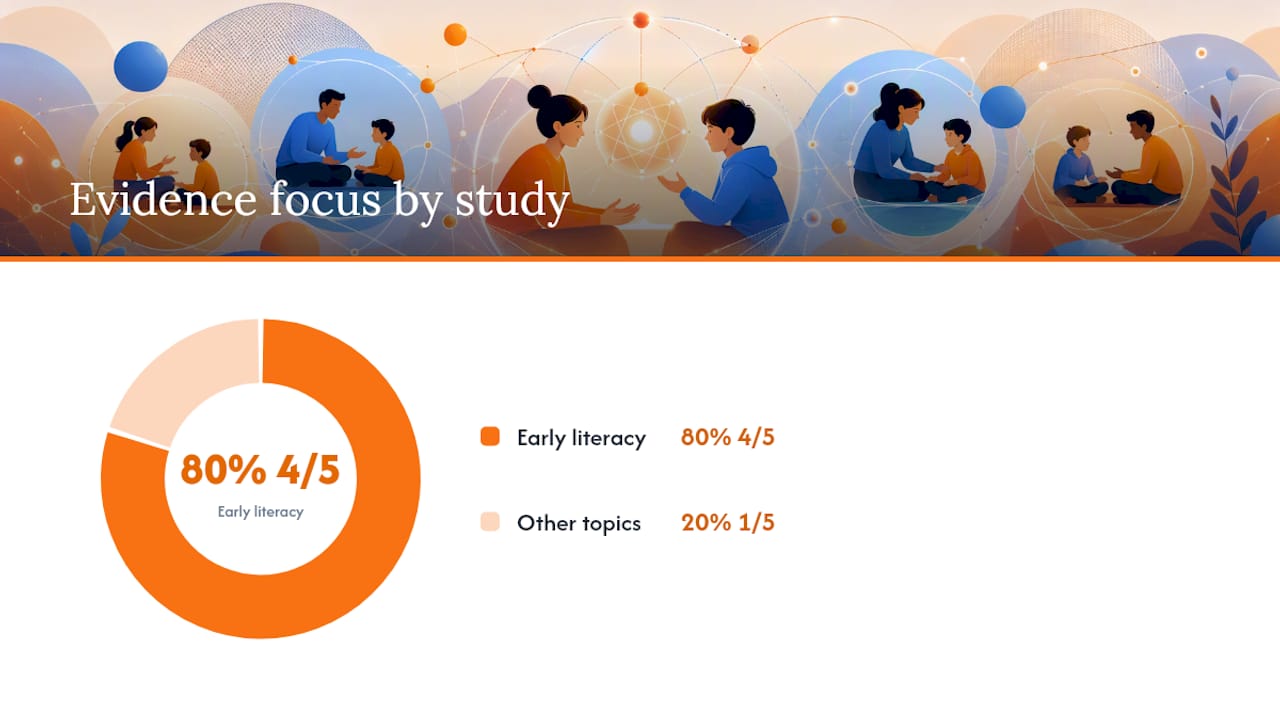
| Study / Source | Context | Headline finding |
|---|---|---|
| Stanford SCALE transcript analysis | Virtual early literacy, K–2 | 1:1 sessions show near-total attention allocation to one student vs. split attention in 2:1 |
| MDPI RCT analysis | Virtual early literacy, early elementary | 1:1 produced substantially larger literacy gains than 2:1 |
| Chapter One program evaluations | In-class embedded, early literacy | Improved early literacy outcomes with high-frequency short sessions |
| Fordham Institute early analysis | One-to-one tutoring model | Effective and potentially scalable when tutor consistency and curriculum focus are maintained |
| FutureEd volunteer model evaluation | Early reading, volunteer tutors | Promising effects, but heavily dependent on tutor training and fidelity |
The Fordham Institute’s early analysis adds an important nuance: effectiveness depends on implementation details, not just the 1:1 ratio. Tutor consistency and curriculum alignment are the variables that determine whether a program delivers on the model’s promise.
Limits matter here. Most of the strongest evidence comes from early literacy in elementary grades. Evidence for middle-school math and secondary subjects is thinner. Group formats with deliberate structure can close some of the gap, particularly when 1:1 is not affordable at scale. And volunteer-based programs show mixed results — promising in some evaluations, inconsistent in others — with training and monitoring as the deciding factor.
Common program models and delivery formats
The one-on-one tutoring model is not a single delivery method. It takes several forms, each with distinct tradeoffs.
In-class embedded vs. pull-out. Embedded tutoring happens within the regular classroom period, minimizing schedule disruption and keeping the student connected to classroom content. Pull-out models allow more focused, uninterrupted sessions but can create transitions that eat into instructional time. Chapter One’s approach favors short, frequent in-class interactions — 3–5 sessions per week, each lasting 5–10 minutes — precisely to preserve continuity while maximizing contact frequency.
Virtual and remote 1:1. Synchronous video-based tutoring has expanded access dramatically, particularly for rural and underserved communities. Blended models combine asynchronous practice with live 1:1 check-ins. The core challenge in virtual delivery is maintaining the shared focus that comes naturally in a physical room.
- Volunteer-led tutoring: Lower cost, broader reach, but requires structured scripts and strong coaching to approach paid-tutor effectiveness.
- Paid paraprofessionals: More consistent availability and training compliance; cost is the primary constraint.
- Certified teacher tutors: Highest instructional quality; typically reserved for the most intensive interventions due to cost.
Program features that protect impact regardless of format:
- Session frequency of at least 3 times per week
- Consistent tutor-student pairing across the program
- Curriculum alignment with classroom instruction
- Structured session protocols rather than open-ended help sessions
What a 1:1 session looks like in practice
Session length and frequency vary by age and subject, but the underlying structure stays consistent.
- Opening check-in (2–3 minutes). A brief warm-up question or review of the previous session. This activates prior knowledge and signals to the student that the tutor remembers where they left off.
- Targeted instruction (5–10 minutes). The tutor introduces or re-teaches a specific skill using a worked example. Think-alouds work well here: the tutor narrates their reasoning aloud while solving, making the cognitive process visible.
- Joint practice (5–10 minutes). Tutor and student work through a problem together. The tutor gradually releases control, prompting rather than telling.
- Independent practice (5–10 minutes). The student works alone while the tutor observes. Corrective feedback is immediate and specific, not evaluative.
- Exit check (2–3 minutes). One quick formative question to confirm the session’s learning target was met. This data drives the next session’s plan.
For early literacy (K–2), sessions of 15–20 minutes at 4–5 times per week tend to outperform longer, less frequent sessions. For middle-school math, 30–45 minute sessions 2–3 times per week are more practical and still effective. In virtual delivery, screen-sharing a shared whiteboard for the worked-example and joint-practice phases keeps both participants anchored to the same visual space. Digital diagrams and visual representations have a documented role in supporting curriculum learning, and the 1:1 context is where that benefit is easiest to deploy.
How to start or improve a one-on-one tutoring program
A well-run program follows a clear sequence. Skipping steps — especially training and fidelity monitoring — is where most implementations fall short.
- Screen and select students. Use curriculum-aligned assessments to identify students with specific, addressable skill gaps. Set SMART goals for each student before the first session.
- Select and match tutors. Prioritize subject knowledge, interpersonal warmth, and language match with the student. Availability and scheduling reliability matter as much as credentials.
- Train tutors before they start. Cover the session protocol, scaffolding techniques, and how to use formative checks. Script the first few sessions for non-expert tutors — scripts reduce variability and build confidence.
- Plan lessons around the student’s gap, not the curriculum sequence. Each session plan should target one specific skill, with a worked example and two to three practice items prepared in advance.
- Monitor fidelity from week one. Observe sessions live or via recording. Check that tutors are following the protocol, using scaffolding, and completing exit checks.
- Review student progress data weekly. Compare against the SMART goals set at intake. Adjust pacing or skill targets when a student plateaus.
- Debrief tutors regularly. Brief weekly check-ins between tutors and a program coordinator prevent drift and catch problems before they compound.
Pro Tip: For volunteer or paraprofessional tutors, provide a one-page session card with the protocol printed on it. Tutors who can glance at the card mid-session stay on track without needing to memorize every step — and that consistency is what fidelity monitoring will confirm.
The FutureEd evaluation of volunteer tutoring models makes the training point plainly: whether a volunteer program approaches paid-tutor outcomes depends almost entirely on how well tutors are coached and monitored.
Tools and technology that support virtual 1:1 tutoring
Virtual delivery works when the technology stays out of the way and keeps both tutor and student focused on the same content. The core capabilities that matter:
- Low-latency audio and video for real-time conversation without lag-induced confusion
- Shared drawing and annotation so tutor and student can work on the same problem simultaneously
- Sticky notes and text tools for brainstorming, vocabulary work, and exit-ticket responses
- File import to bring in reading passages, math worksheets, or diagrams
- Simple student access with no software download or account creation required — friction at login loses session minutes
A virtual tutoring session checklist covers the full setup sequence: share the session link before the call, test audio and video, open a pre-built whiteboard template, and confirm the student can draw or type on the shared canvas. Pre-built templates — a problem prompt at the top, a worked-example region in the middle, and a student workspace at the bottom — cut setup time and let the tutor focus entirely on instruction rather than logistics.
Real-time visual collaboration directly supports the undivided-attention mechanism. When both participants are looking at and writing on the same canvas, the tutor’s attention stays on the student’s thinking rather than on managing materials. Onlinewhiteboard provides exactly this: a browser-based canvas with shared drawing, sticky notes, and instant link sharing, with no installation needed for the student.

Costs, scalability, and design choices that affect affordability
One-on-one tutoring is more expensive per student than group instruction. The primary cost drivers are tutor pay, the 1:1 ratio itself, training and coaching time, and scheduling logistics. Understanding where costs concentrate helps program leaders make deliberate tradeoffs.
- Tutor pay is the largest variable. Certified teachers cost more than paraprofessionals; paraprofessionals cost more than trained volunteers.
- Session frequency drives total hours. High-frequency short sessions (Chapter One’s model) can be more cost-effective than fewer long sessions when tutor time is the binding constraint.
- Training and coaching are often underbudgeted. Cutting them reduces cost in the short term and impact in the long term.
- Two-on-one as a cost lever: Moving to 2:1 reduces tutor hours per student but, as the Hechinger Report’s coverage of cheaper tutoring trials notes, requires deliberate instructional design to avoid losing the personalization that makes 1:1 effective.
Volunteer models offer the most significant cost reduction. The FutureEd evaluation shows they can work — but only when coaching and fidelity monitoring are strong. The Fordham Institute’s analysis of Chapter One’s model suggests that with the right structure, 1:1 tutoring can be both effective and scalable. The key design lever is not the tutor type but the protocol: structured sessions with clear skill targets cost less to monitor and replicate than open-ended tutoring.
How to measure success and monitor progress
Measurement should happen at three levels: learning gains, fidelity, and engagement.
Learning metrics:
- Curriculum-aligned short-cycle assessments after every 4–6 sessions
- Grade-level benchmark assessments at the start, midpoint, and end of the program
- Growth-percentile measures to track relative progress against peers
Fidelity and process metrics:
- Session count per student (did they receive the planned dosage?)
- Tutor consistency (same tutor across sessions, or frequent changes?)
- Observation scores from live or recorded session reviews
- Transcript or recording sampling to check protocol adherence
Engagement metrics:
- Attendance and session completion rate
- On-task behavior observed during sessions
- Student self-report on confidence and perceived progress
- Retention rate across the program period
A practical monitoring cadence: baseline assessment before session one, a brief progress probe every week, and a full summary review monthly. Programs that wait until the end of a semester to check data lose weeks of instructional time they could have redirected. Weekly data reviews, even brief ones, are what separate programs that adjust from programs that drift.
What actually separates good programs from great ones
The research on one-on-one tutoring is compelling, but it can create a false sense of security. Practitioners sometimes assume that the 1:1 ratio alone will produce gains — that simply pairing a tutor with a student is enough. It is not.
What the Stanford SCALE work and the RCT analyses reveal is that the ratio is a precondition, not the cause. The cause is what happens inside the session: whether the tutor’s attention is genuinely undivided, whether feedback is immediate and specific, whether the student feels known and motivated. Programs that treat the ratio as the intervention and skip structured protocols, training, and monitoring consistently underperform. The most common failure mode is not a bad tutor — it is an undertrained tutor running unstructured sessions with no feedback loop.
The practical implication: invest in coaching before you invest in scale. A smaller program with well-trained tutors and strong fidelity monitoring will outperform a larger program with undertrained tutors every time. The evidence from volunteer models makes this especially clear — the gap between a well-coached volunteer and an unsupported one is larger than the gap between a volunteer and a paid professional.
Onlinewhiteboard makes virtual 1:1 tutoring easier to run
Running a virtual one-on-one session well means keeping the student’s attention on the problem, not on technology. Onlinewhiteboard gives tutors a shared canvas that loads instantly in any browser — no download, no account required for the student. A tutor can open a pre-built template with a worked example and a student workspace, share the link, and be drawing together within seconds. For live math problem-solving, both participants write on the same canvas in real time. For reading comprehension, the tutor imports a passage and annotates it alongside the student, highlighting and adding sticky notes as the conversation develops.
For tutors running multiple sessions per week, a free account at Onlinewhiteboard covers the core use case. A paid plan adds session saving, export, and team management features — worth considering for program coordinators who need to archive session boards or share templates across a tutoring team.
Sources
- Why One-on-One Tutoring Works | SCALE Initiative
- The Power of Personalized Attention: Comparing Pedagogical Approaches in Small Group and One-on-One Early Literacy Tutoring (MDPI)
- Early Literacy Intervention – High Impact Tutoring | Chapter One
- An early analysis of a one-to-one tutoring model | Fordham Institute
- The Effectiveness of a Volunteer One-on-One Tutoring Model for Early Reading | FutureEd
- Proof points: trial finds cheaper, quicker way to tutor young kids in reading | Hechinger Report
For program design decisions, prioritize the RCT analyses and program evaluations over practitioner guides — the evidence base is specific enough to inform structural choices about session length, frequency, and tutor selection.