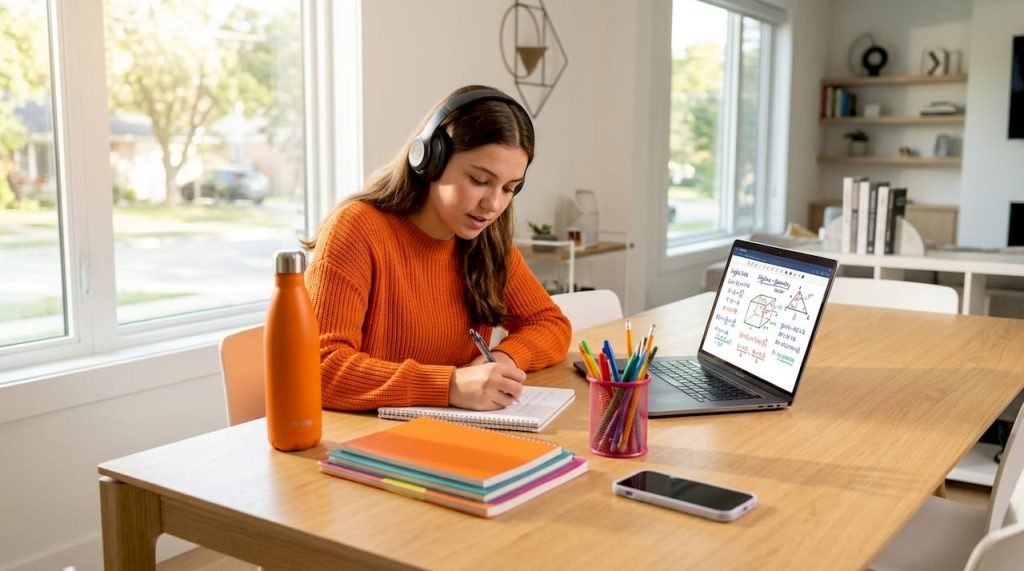
Online tutoring is defined as live or asynchronous academic support delivered digitally through tools like video conferencing, shared digital whiteboards, and collaborative documents. Platforms such as UPchieve, Wyzant, and Tutor.com have made personalized instruction available to students regardless of geography or schedule. Research now confirms that virtual tutoring is as effective as in-person tutoring when sessions are frequent and well-structured. For parents and students weighing their options, understanding how online tutoring works, what quality looks like, and what it costs is the clearest path to a smart decision.
Online tutoring explained: how sessions work and what technology is involved
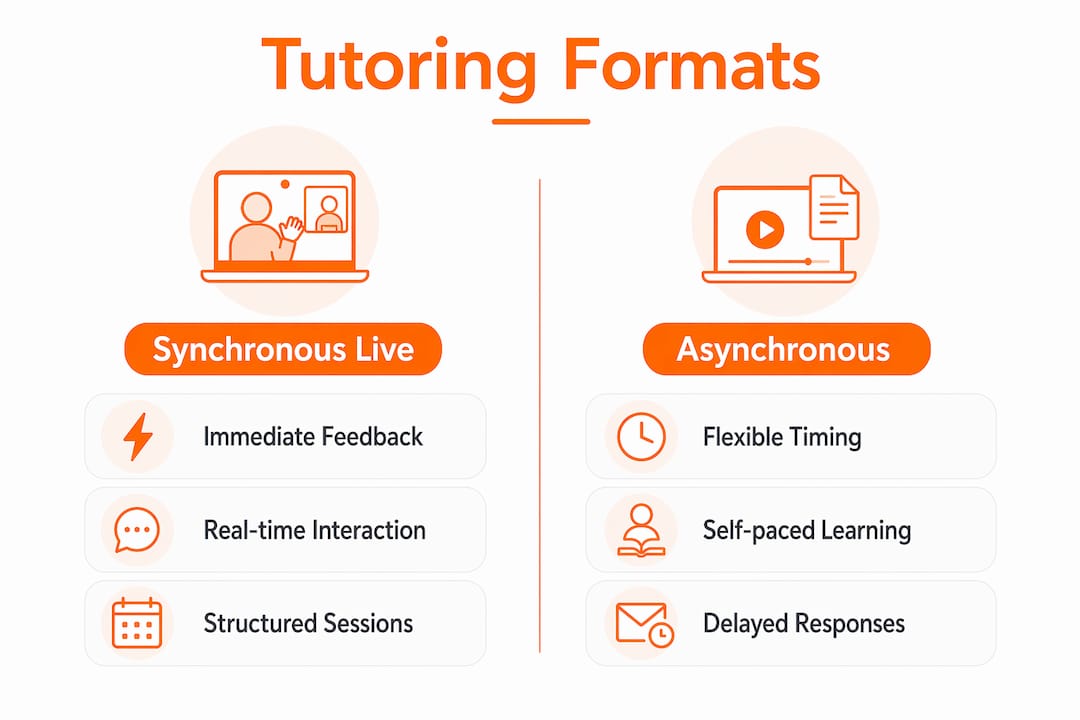
Online tutoring operates in three distinct formats: synchronous, asynchronous, and adaptive platform-based. Each serves different learning needs and schedules, but all rely on digital tools to replace the physical classroom.
Synchronous tutoring is live, real-time instruction delivered via video conferencing tools like Zoom or Google Meet, combined with interactive shared workspaces such as digital whiteboards and shared documents. The tutor and student see and hear each other, work through problems together on a shared canvas, and exchange feedback instantly. This format mirrors the experience of sitting across a table from a tutor, with the added benefit of recorded sessions and digital notes.

Asynchronous tutoring involves delayed interaction. A student submits a question, essay draft, or problem set, and a tutor responds with written or recorded feedback within a set timeframe. This format suits students with unpredictable schedules or those who need time to process feedback before responding.
Adaptive platform-based tutoring blends software-driven practice with human support. Platforms like Khan Academy pair algorithm-driven exercises with tutor check-ins, adjusting difficulty based on student performance. This hybrid approach works well for subjects like math and science where repetition and incremental challenge are central to mastery.
A well-structured synchronous session typically follows four stages: a diagnostic check to identify where the student is struggling, direct instruction on the target concept, guided practice with real-time feedback, and a formative check to confirm understanding before the session ends. This arc keeps sessions focused and measurable.
Pro Tip: Before your first session, test your internet connection, camera, and microphone. A dropped connection mid-explanation wastes paid time and breaks the student’s concentration.
Is online tutoring effective? What the research actually shows
The evidence on online tutoring’s effectiveness is clear and consistent. High-dosage tutoring in K–12 produces statistically significant learning gains, with pooled impact estimates ranging from 0.06 to 0.09 standard deviations. That translates to roughly one to two additional months of learning. Critically, virtual tutoring produces the same gains as in-person tutoring when the program design is equivalent.
“Tutoring effectiveness depends more on frequency and instructional design than simply online vs. in-person format.” — Overdeck Family Foundation, Personalized Learning Initiative Interim Report 2023-24
Dosage is the single most important variable. A study on UPchieve, a free online tutoring platform, found that increasing sessions from 3.5 to 9 over 14 weeks produced a 0.23 standard deviation improvement in math scores, with a 91% probability of positive impact on math knowledge. That is a meaningful gain driven entirely by frequency, not by switching platforms or hiring a more credentialed tutor.
Motivational outcomes also improve with consistent online tutoring. Students who engage regularly with a familiar tutor report higher confidence and greater willingness to attempt challenging problems. The relationship itself, not just the instruction, drives engagement.
The research does flag one important caveat. Programs that lack curricular alignment or consistent session structure show weaker results. Online tutoring is not automatically effective. It requires the same intentional design that makes any good instruction work.
What makes an online tutoring program high-impact?
Not all tutoring programs deliver the same results. The components linked to the largest learning gains are specific and measurable: frequent sessions, a sustained tutor-student relationship, alignment with the student’s school curriculum, and ongoing progress monitoring.
Here is what to look for when evaluating any program:
- Session frequency: Programs delivering two to three sessions per week consistently outperform those offering one session per week, regardless of session length.
- Curricular alignment: The tutor should know what the student’s teacher is covering and reinforce those concepts directly, not teach a parallel curriculum.
- Progress monitoring: Quality programs track student performance across sessions and adjust instruction based on that data.
- Tutor credentials and vetting: Published standards for tutor qualifications matter more than platform size. Ask specifically how tutors are screened and trained.
- Engagement techniques: The best tutors are not just subject experts. Po-Shen Loh, the former U.S. Math Olympiad coach, hires actors to coach tutors on communication and engagement, recognizing that online delivery demands more deliberate performance than in-person teaching.
| Quality indicator | What to ask the provider |
|---|---|
| Session frequency | How many sessions per week does the program recommend? |
| Curricular alignment | How does the tutor coordinate with the student’s school curriculum? |
| Progress monitoring | How is student progress tracked and reported to parents? |
| Tutor vetting | What are the minimum qualifications and how are tutors screened? |
| Session structure | Is there a standard session arc, or does each tutor set their own format? |
Pro Tip: Ask any tutoring provider for a sample session plan before committing. A provider that cannot describe a clear session structure is unlikely to deliver consistent results.
Comparing online tutoring formats: which one fits your student?
Choosing the right format depends on the student’s learning style, the subject, and the level of flexibility needed. Each format has genuine strengths and real limitations.
Synchronous live tutoring is most effective for students who need immediate feedback, struggle with self-direction, or are working through complex conceptual material in subjects like algebra, chemistry, or essay writing. The live interaction allows a tutor to catch and correct misunderstandings in real time, which is difficult to replicate in any other format.
Asynchronous tutoring suits students who are self-directed, work at unusual hours, or need support with writing and research tasks where turnaround time is less critical. The limitation is that back-and-forth clarification takes hours or days rather than seconds.
Adaptive platform-based tutoring works best as a supplement rather than a primary tutoring method. It excels at building procedural fluency in math and standardized test preparation, but it cannot replicate the nuanced feedback a skilled human tutor provides for open-ended tasks.
| Format | Best for | Typical cost range | Main limitation |
|---|---|---|---|
| Synchronous live | Complex concepts, real-time feedback | $40–$200 per hour | Requires scheduling coordination |
| Asynchronous | Writing, self-directed learners | Varies by platform | Slow feedback loop |
| Adaptive platform | Math drills, test prep | $100–$1,400 per course | Limited for open-ended subjects |
Students preparing for the SAT or ACT often combine adaptive platform practice with weekly synchronous sessions, using the platform to build speed and the live tutor to address persistent weaknesses. That combination tends to produce stronger results than either format alone.
Cost of online tutoring: what parents need to budget for
Private tutoring rates range from $40 to $200 per hour, with extended packages reaching $1,600 to $8,000 depending on the provider and subject. Online courses and platform-based programs typically cost between $100 and $1,400. Those numbers look straightforward, but hourly rate alone is a misleading metric.
The real question is total planned dosage. A program charging $80 per hour for two sessions per week over 12 weeks costs $1,920 and delivers 24 hours of instruction. A program charging $60 per hour for one session per week over the same period costs $720 but delivers only 12 hours. The cheaper program may produce weaker results simply because of lower dosage, not lower quality. When budgeting for tutoring, total planned instructional hours and progress monitoring mechanisms are more informative than hourly rates alone.
Here is a practical approach to evaluating cost:
- Calculate the total cost of the program at the recommended dosage, not just the per-session rate.
- Ask whether the program includes progress monitoring and parent reporting, or whether those are add-ons.
- Compare free or low-cost options like UPchieve for math support before committing to premium services.
- Confirm the cancellation policy. Flexible programs reduce financial risk if the student’s needs change.
- Check whether the program aligns with school curriculum, since misaligned tutoring can require more hours to show results.
Pro Tip: Set up a quiet, dedicated space for tutoring sessions with good lighting and a stable internet connection. The physical environment affects concentration more than most parents expect.
Key takeaways
Online tutoring delivers measurable learning gains equivalent to in-person tutoring when programs prioritize session frequency, curricular alignment, and a sustained tutor-student relationship over platform prestige or hourly rate.
| Point | Details |
|---|---|
| Format does not determine effectiveness | Virtual and in-person tutoring produce equivalent gains when dosage and design are matched. |
| Dosage is the primary driver | Increasing sessions from 3.5 to 9 over 14 weeks produced a 0.23 SD improvement in math scores. |
| Quality indicators are specific | Evaluate session structure, curricular alignment, tutor vetting, and progress monitoring before committing. |
| Cost requires full-program math | Compare total instructional hours at recommended dosage, not hourly rates in isolation. |
| Engagement training matters | Tutors coached on communication and delivery produce better outcomes in the online medium. |
What I’ve learned from watching online tutoring programs succeed and fail
After spending years analyzing educational programs and the research behind them, the pattern is consistent: the families who get the most from online tutoring are not the ones who found the most expensive platform. They are the ones who treated tutoring as a structured intervention rather than a weekly check-in.
The most common mistake I see is treating online tutoring as a passive service. Parents sign up, the student shows up, and everyone waits for grades to improve. That approach rarely works. The students who make real progress are those whose parents ask for session summaries, whose tutors communicate with classroom teachers, and whose programs adjust based on actual performance data rather than gut feel.
The research from the AEFP Live Handbook is unambiguous on this point: technology supports tutoring but cannot replace the human connection that drives engagement and learning. A digital whiteboard and a video call are tools. What happens within those tools, the quality of the questions a tutor asks, the patience they show when a student is stuck, the way they celebrate small wins, is what actually moves the needle.
My honest advice to parents: spend less time comparing platforms and more time interviewing tutors. Ask them how they handle a student who shuts down during a session. Ask them what they do when a student is not making progress after four weeks. The answers will tell you more than any platform review.
— A
How Onlinewhiteboard makes online tutoring sessions more effective
Effective online tutoring depends on more than a video call. Tutors need a shared space where they can model problems, annotate student work, and keep both parties actively engaged throughout the session.
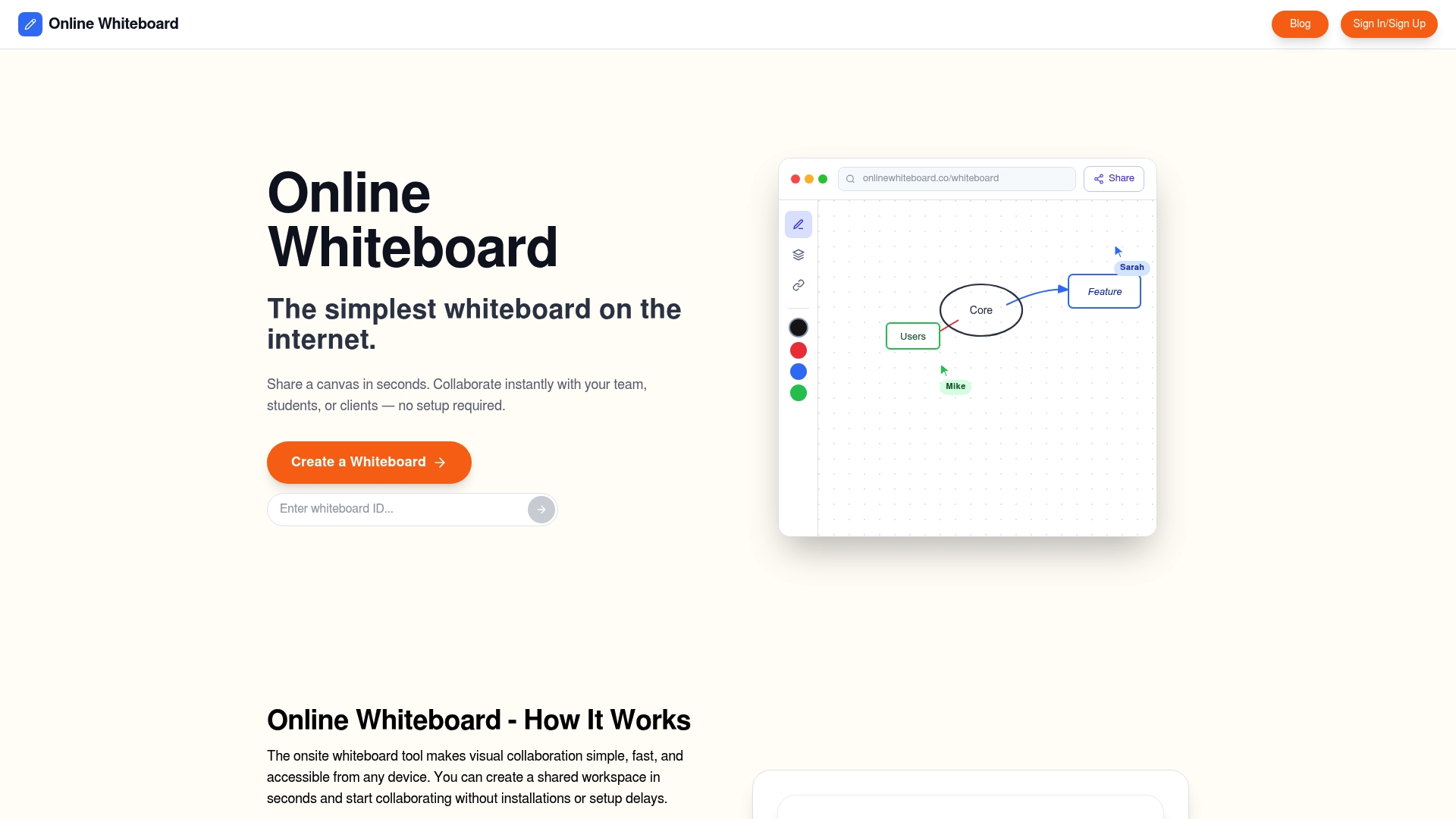
Onlinewhiteboard provides exactly that. With real-time collaborative tools available instantly in any browser, tutors can draw diagrams, work through equations, map essay structures, and give students a canvas to respond on, all without downloads or complicated setup. Students stay active participants rather than passive viewers, which is the single biggest predictor of session effectiveness. Whether you are a tutor running daily sessions or a parent looking for a tool to support your student’s learning, Onlinewhiteboard gives you a clean, fast workspace that keeps every session focused and productive.
FAQ
What is online tutoring?
Online tutoring is academic support delivered digitally through video conferencing, shared workspaces, and collaborative documents. It operates in synchronous (live), asynchronous (delayed), and adaptive platform-based formats.
Is online tutoring as effective as in-person tutoring?
Yes. Research from the Overdeck Family Foundation confirms that virtual tutoring produces equivalent gains to in-person tutoring, with pooled impact estimates of 0.06 to 0.09 standard deviations, roughly one to two additional months of learning.
How much does online tutoring cost?
Private online tutoring rates typically range from $40 to $200 per hour, with extended packages reaching $1,600 to $8,000. Platform-based courses generally cost between $100 and $1,400 depending on the subject and duration.
How do I know if an online tutoring program is high quality?
Look for programs that offer frequent sessions, align with the student’s school curriculum, monitor progress across sessions, and have clear tutor vetting standards. Session structure and tutor communication training are stronger quality signals than platform reputation alone.
How many sessions does a student need to see results?
Frequency drives results more than any other variable. Studies on UPchieve found that moving from approximately 3.5 to 9 sessions over 14 weeks produced a statistically significant improvement in math scores, suggesting two to three sessions per week as a practical target for meaningful gains.